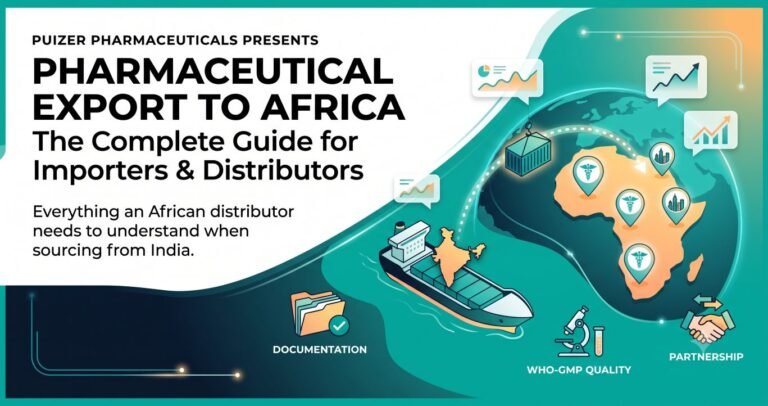

Pharmaceutical Export to Africa: The Complete Guide for Importers & Distributors
Everything a first-time or growing African pharmaceutical importer needs to understand before sourcing medicines from India — market context, regulatory reality, documentation, quality verification, and how to choose the right manufacturing partner.
1. Why Africa’s Pharmaceutical Import Demand Keeps Growing
Africa’s healthcare systems are expanding faster than local manufacturing capacity can keep pace with. Most African countries produce only a small fraction of the medicines they consume, which means distributors, hospital procurement teams, and pharmacy chains across the continent depend heavily on imported pharmaceuticals to keep essential medicine supply chains reliable.
This gap creates real opportunity for importers and distributors — but it also means buyers face a crowded, uneven market of potential suppliers, ranging from well-established WHO-GMP certified manufacturers to smaller operations with inconsistent quality practices. Understanding how to evaluate a supplier properly, covered later in this guide, matters more in this market than in most.
2. Why India Is a Preferred Sourcing Destination
India has built one of the world’s largest pharmaceutical manufacturing bases, with a wide network of WHO-GMP certified facilities capable of producing generics, branded generics, and nutraceuticals across virtually every major therapeutic category. For African importers, this translates into three practical advantages.
- Product breadth: Tablets, capsules, syrups, dry syrups, injectables, ointments, and nutraceuticals are all commonly available from a single manufacturing base, simplifying procurement for distributors who need a varied product catalogue.
- Cost competitiveness: India’s generic manufacturing scale generally allows for more competitive pricing than sourcing the same quality tier from Europe or the US, without compromising on GMP compliance.
- Export experience with African markets: Many Indian manufacturers, including established Africa-focused exporters, have years of accumulated experience navigating country-specific registration requirements — which shortens the learning curve for new importers.
That said, the “Indian manufacturer” label alone is not a quality guarantee — WHO-GMP certification, documented quality systems, and a manufacturer’s actual regulatory track record matter far more than country of origin. Section 6 covers how to verify this properly.
3. Direct Export vs. Third-Party Manufacturing: Which Model Fits You
Before going further, it’s worth understanding the two fundamentally different ways African businesses source pharmaceuticals from Indian manufacturers — because the right choice shapes almost everything else in this guide, from documentation to timelines.
Many distributors start with direct export to establish market presence, then move into private label or PCD franchise arrangements once they understand their market well enough to invest in their own brand. Neither path is inherently better — it depends on your business stage and goals.
4. Understanding Regulatory Compliance Across African Markets
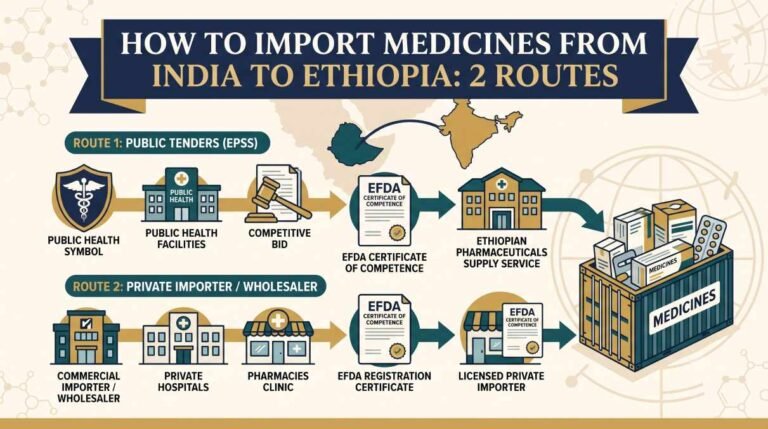
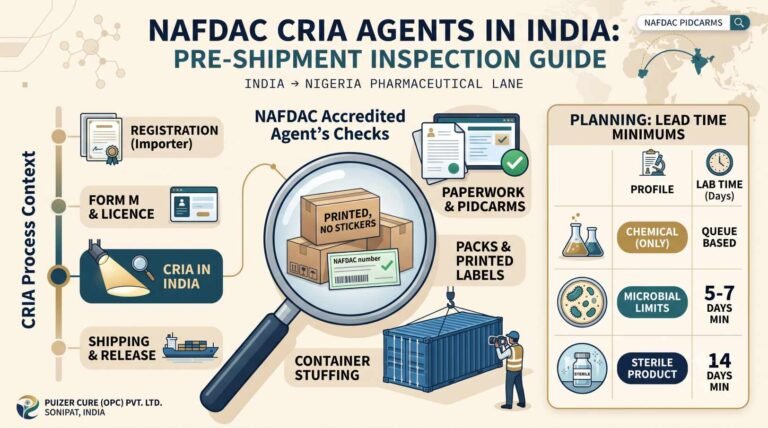
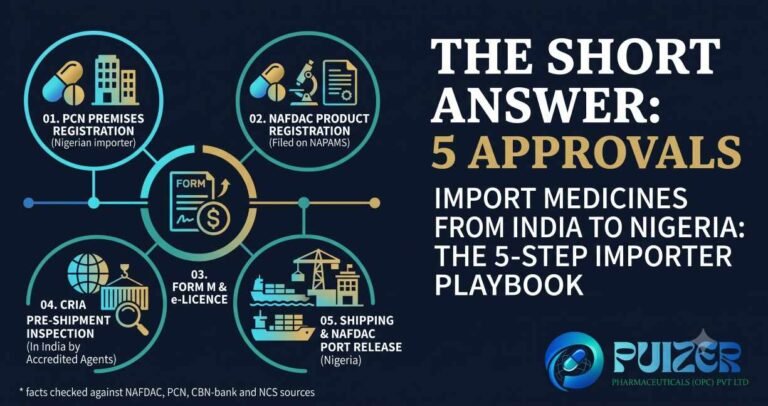
Every African country regulates pharmaceutical imports through its own national authority, and requirements differ meaningfully between them — a dossier accepted in one country will rarely transfer directly to another without adjustment. Below is a quick-reference view of the major regulatory bodies most import businesses will encounter.
Registration timelines commonly range from several months to over a year depending on the country and product category, so it’s worth building this into your launch planning early rather than treating it as a last-minute formality. We’ve published detailed, step-by-step registration guides for Nigeria and Kenya specifically — read the NAFDAC registration walkthrough or the PPB Kenya registration guide for the detailed process. For a side-by-side comparison across all major markets, see our complete regulatory comparison guide.
5. Essential Export Documentation You’ll Be Asked For
Regardless of destination country, most African regulatory authorities and customs processes will expect a broadly similar core set of documents from any pharmaceutical shipment:
- Certificate of Analysis (COA): batch-specific quality testing results confirming the product meets its specification.
- Certificate of Pharmaceutical Product (COPP): issued in the WHO-recommended format, confirming the product is authorized for sale in the country of manufacture.
- GMP Certificate: confirming the manufacturing site’s compliance status.
- Free Sale Certificate: evidence the product is legally sold in its country of origin or other markets.
- Commercial invoice and packing list: standard trade documentation for customs clearance.
Missing or improperly authenticated documentation is one of the most common causes of shipment delays at ports and during registration review — it’s worth confirming your supplier’s documentation process before placing your first order, not after. Our complete export documentation checklist breaks down exactly what to request and verify for each document type.
6. What WHO-GMP Actually Means for Your Business
“WHO-GMP certified” appears on almost every pharmaceutical exporter’s website, which unfortunately makes it easy to treat as a marketing checkbox rather than a meaningful signal. In practice, WHO-GMP certification reflects a documented, audited system covering everything from raw material sourcing and facility design to batch record-keeping and final release testing.
For an importer, the practical value of this certification is that it gives you a verifiable quality baseline you can point to with your own regulatory authority, your customers, and — if anything ever goes wrong — your own liability protection. It’s worth asking any prospective supplier not just whether they hold WHO-GMP certification, but for a copy of the certificate itself, its issuing authority, and its current validity period.
Our detailed breakdown, WHO-GMP Certification Explained, covers exactly what to verify and the specific questions worth asking before you commit to a manufacturing partner.
7. MOQ, Packaging & Logistics Realities
Two of the most common friction points for first-time African importers are minimum order quantities and export packaging — both worth understanding before you request quotes.
Minimum Order Quantity (MOQ)
MOQ varies significantly by product category and manufacturing model. Established manufacturers with flexible policies will often accommodate smaller first orders specifically to help new distributors test a market before committing to bulk volumes — it’s a reasonable point to negotiate rather than accept as fixed.
Export Packaging
Sea freight to African ports can involve weeks of transit through variable humidity and temperature conditions. Packaging genuinely designed for export — rather than simply repurposed domestic packaging — makes a measurable difference in product integrity on arrival. This is worth confirming directly with any supplier rather than assuming it’s standard practice.
Read the full breakdown in our MOQ, packaging, and shipping guide for African distributors.
8. Building Your Own Brand: Private Label & PCD Options
For importers ready to move beyond reselling and build their own market presence, private label and PCD (Propaganda Cum Distribution) pharma franchise models offer a path to owning a brand without owning a factory. Under these arrangements, a manufacturer produces under your label, and you retain the marketing rights and brand equity in your territory.
This route generally requires more upfront planning — label design, target market selection, and often a somewhat higher first-order commitment — but it builds a long-term asset rather than a resale margin. Our dedicated guide, Private Label & PCD Pharma Franchise for African Entrepreneurs, walks through how to evaluate whether this model fits your stage of business.
9. Checklist: How to Choose the Right Export Partner
Before committing to any manufacturing or export partner, run through this checklist. Click each item to mark it off as you evaluate a prospective supplier.
If you’d like help working through this checklist for your specific product requirement, our export team is available to walk through it with you directly — see the contact section below.
Have a Specific Product or Market in Mind?
Tell us what you’re looking to import or manufacture, and our Africa export team will walk you through the right path — direct export, third-party manufacturing, or private label.
📩 Discuss Your Requirement